|
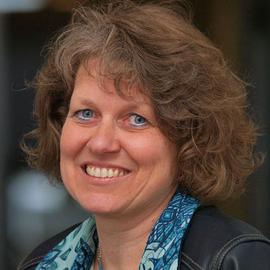
Matthias BethgePublications, Email, Phone: +49 7071 29 89017Group Leader
My research goal is to understand how the brain makes sense of its high-dimensional sensory input. In particular, I seek to understand the formation of distributed neural representations in the early visual system by studying natural image statistics, unsupervised learning, and neural population coding, and by developing new data-analysis tools.
|
|
Heike KönigEmail, Phone: +49 7071 29 89018Secretary |
|
Judith LamEmail, Homepage, Phone: +49 7071 29 89019Bernstein Coordinator
At the Bernstein Center Tübingen, scientists from various disciplines, including theoretical and experimental neurobiology, machine learning, and medicine, collaborate in order to analyze the basis of inference processes in the brain. In particular, a main research goal is to understand the coordinated interaction of neurons during information processing.
|
|
Philipp BerensPublications, Email, Homepage, Phone: +49 7071 29 88907Postdoc
I am interested in the computations performed by neuronal ensembles in the early visual system of rodents and primates. I use statistical models to study the interactions in large populations of neurons.
|
|
Holly GerhardPublications, Email, Homepage, Phone: +49 7071 29 88904Postdoc
I conduct psychophysical experiments to measure human visual sensitivity to the statistical structure of natural images. I am currently studying sensitivity to higher-order pixel correlations present in local neighborhoods of natural images. During my phd studies I worked on material perception and the effects of illumination in 3D scenes. I am also interested in scene perception and modeling fixation data.
|
|
Niklas LüdtkePublications, Email, Phone: +49 7071 29 88906Postdoc
I am studying the statistical properties of natural images. As part of my current
project, I have developed a method for generating surrogates of natural textures. The framework is used to evaluate the descriptive power of models of natural images and can also provide controlled complex stimuli for psychophysical or neurophysiological experiments. I am also interested in the interplay between neural firing statistics and synaptic plasticity and in population coding.
|
|
Alexander BöttcherPublications, Email, Phone: +49 7071 29 88905Graduate Student
My aim is to understand how the activity of sensory neurons leads to decisions taken by the brain. In particular, I am interested in neural population coding of the primary somatosensory cortex.
|
|
Alexander EckerPublications, Email, Phone: +49 7071 29 88908Graduate Student
The goal of my research is to understand how populations of neurons interact to process visual information. I combine multi-electrode recordings in primary visual cortex of monkeys with theoretical approaches to study population coding.
|
|
Matthias KümmererPublications, Email, Phone: +49 7071 29 88909Graduate Student |
|
Philipp LiesPublications, Email, Phone: +49 7071 29 88910Graduate Student
In visual systems, invariant feature representation is an important property, present from low level feature detection (e.g. recognizing a triangle independent of its orientation) to high level perception (e.g. finding your grandma in an old picture). My research focuses on how invariant feature representations can be learned from the statistics of natural images. We quantitatively evaluate different unsupervised learning principles and compare their features to those found in recordings from visual cortex.
|
|
Lucas TheisPublications, Email, Phone: +49 7071 29 88910Graduate Student
A lot of evidence from theoretical considerations and biological observations points to the fact that a good representation for natural images should be hierarchically organized. Yet, the best known models of natural images are based on what is better described as shallow representations. My research aims at resolving this discrepancy by finding better strategies for capturing the regularities found in natural images in a hierarchical manner.
|
|
Debapriya DasPublications, Email, Phone: +49 7071 29 88906Research Assistant |
|
Leon GatysEmailUndergraduate Student
Experimental evidence suggests the possibility to encode information in the variance of neural activity. In my current research I use information theory to investigate the theoretical bounds on the coding performance of such variance channel.
|
|
Tara FarzamiPublications, EmailMaster Student
One of the goals of sensory systems neuroscience is to capture the relationship between sensory stimuli and neural responses. Probabilistic models can be used to characterize the stochasticity in this input-output relationship. In my project, I am developing and implementing statistical models that are more compatible with biophysical properties of sensory neurons.
|
|
Wouter KouwPublications, EmailMaster Student
Computational neuroscience studies the operations performed by neurons to represent and process sensory input. The input to the visual system is obtained by moving the eyes towards informative locations in space. In my project, I use natural image models combined with psychophysics to study how the brain selects these salient locations.
|